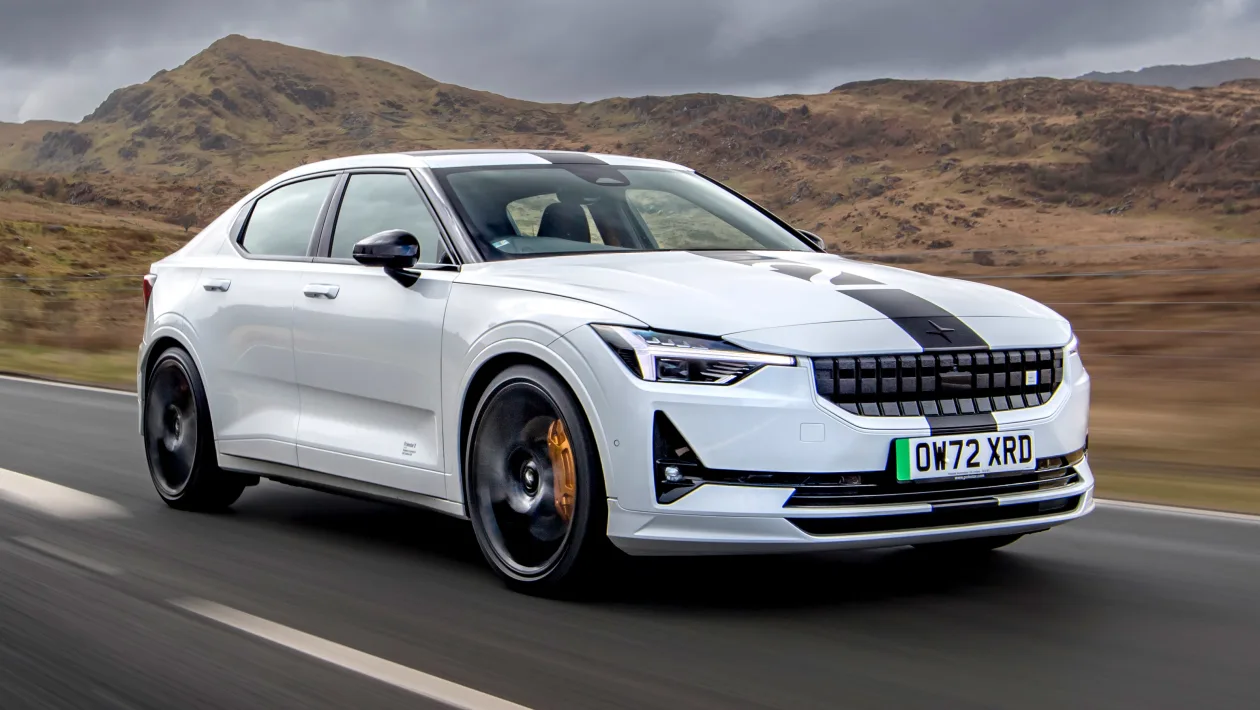
The Polestar 2 BST Edition 270 is the most extreme production Polestar 2 ever made. Limited to just 270 units worldwide — with only 47 allocated to the United States — it was born from a hand-built prototype, shaped at the Goodwood Festival of Speed, and engineered around a single idea: make the Polestar 2 a proper driver's car.
The Origin: A Prototype Called "The Beast"
In 2020, Polestar CEO Thomas Ingenlath challenged his engineering and design teams to take the Polestar 2 and create something that "makes a strong statement." The result was a one-off experimental vehicle nicknamed "The Beast" — featuring upgraded wheels, color-matched bodywork, a lowered stance, enhanced handling components, and improved power delivery.
Ingenlath used The Beast as his personal daily driver around Gothenburg, Sweden, where it attracted considerable attention. The car made its public debut at the 2021 Goodwood Festival of Speed in Chichester, England. The enthusiastic reception there directly motivated the development of a limited-production version. The name "BST" is pronounced "beast" by most people at Polestar — a direct nod to the prototype's nickname.
What Makes It Special
The BST 270 is fundamentally a chassis and handling project. It uses the original (2021–2023) dual-motor powertrain, tuned to 350 kW (476 hp) — the same output as the Performance software upgrade — but the real story is underneath. (The follow-up BST Edition 230, a 2023 model year car, used the same powertrain and chassis recipe, with the 2024-style front-end treatment.) Polestar made 166 discrete changes compared to the standard AWD Performance Pack Polestar 2, and the vast majority of them are focused on mechanical grip and handling feel rather than outright power.
This is not a car that tries to win drag races. It's a car that tries to make you grin on a mountain road.
Performance Specs
| Spec | Value |
|---|---|
| Power | 350 kW / 476 hp |
| Torque | 680 Nm / 502 lb-ft |
| 0–60 mph | 4.2 seconds |
| Top speed | 205 km/h (127 mph) |
| Drivetrain | AWD (dual motor) |
| Battery | 78 kWh lithium-ion |
| EPA range | ~247 miles |
| DC fast charging | Up to 155 kW |
Suspension: The Heart of the BST
The suspension is where the BST 270 separates itself from every other Polestar 2. This isn't a retuned version of the standard Performance Pack Ohlins setup — it's a fundamentally different system.
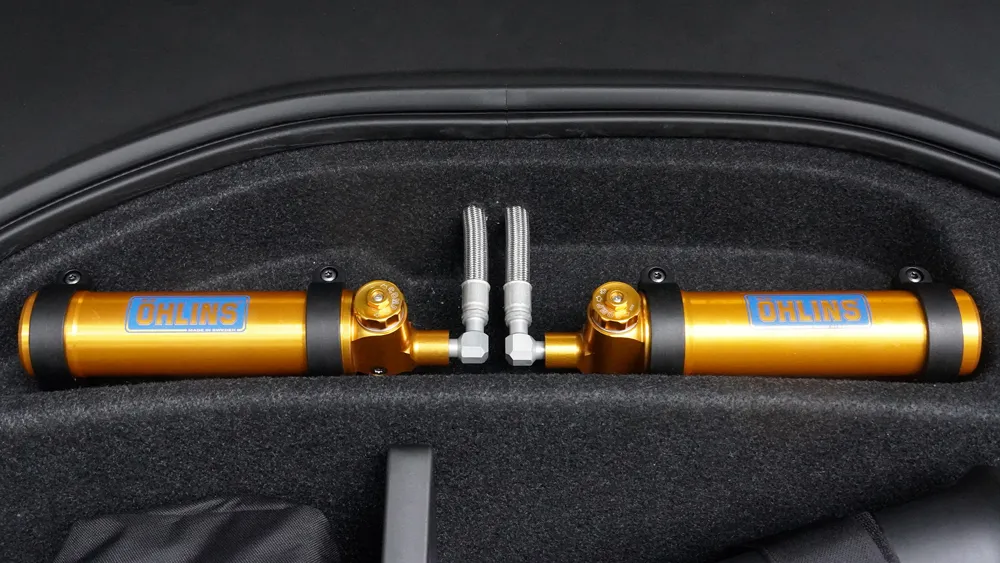
- Front dampers: Ohlins 2-way adjustable dampers with external (remote) reservoirs, offering competition-derived tuning for both compression and rebound. The adjusters have a 22-click range, letting owners fine-tune the car from comfortable daily driving to aggressive track use.
- Rear dampers: Updated Ohlins Dual Flow Valve (DFV) dampers
- Springs: Custom-made, 20% stiffer than the standard Polestar 2
- Ride height: Lowered 25 mm (approximately 1 inch) compared to standard
- Front strut bar: A custom-fitted aluminum strut bar connects the front suspension mounts, increasing chassis rigidity and improving steering stability at speed
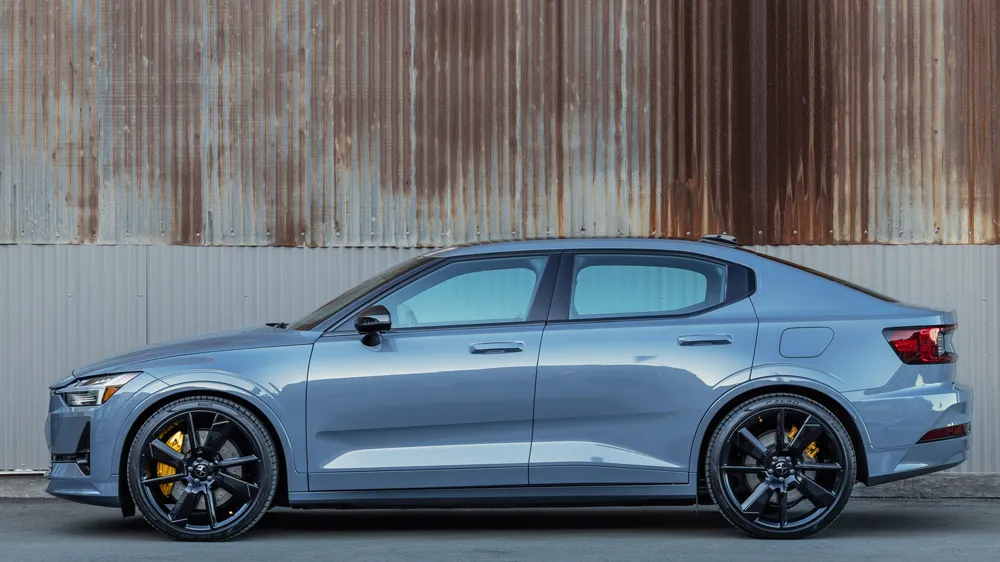
Polestar's approach was deliberate: prioritize mechanical grip over aerodynamic devices. There are no added fenders, splitters, or spoilers. The car looks almost identical to a standard Polestar 2 — which is part of the appeal.
Brakes, Wheels, and Tires
The braking and tire package is equally purpose-built:
- Front brakes: Two-piece 375 mm four-piston Brembo calipers in Swedish gold
- Rear brakes: 320 mm Brembo
- Wheels: 21-inch forged (not cast) alloy wheels, exclusively engineered for the BST Edition 270 and inspired by the Polestar 1 design. The rear wheels are half an inch wider than the fronts — a staggered setup for better rear traction.
- Tires: Pirelli P Zero 245/35R21, custom-developed specifically for this car with a Polestar logo on the sidewall. Built on Pirelli's "Elect" EV-specific tire technology, these are a stickier compound than the Continental SportContacts used on the base car.
Exterior and Interior
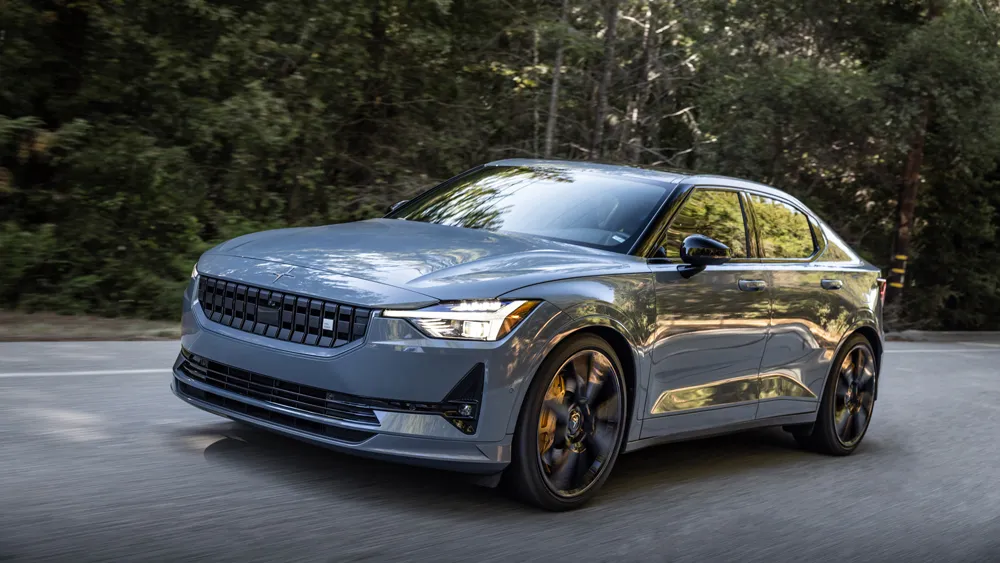
The BST 270 was available in two colors: Snow (white) and Thunder (gray). Two options were offered:
- Matte black racing stripe with a "2" graphic on the hood, bisecting the panoramic sunroof — $1,000
- Full-body satin 3M Battleship Gray wrap — $5,000
The black plastic body cladding found on standard Polestar 2s is replaced with color-matched panels, giving the car a cleaner, more premium look. Side mirrors are glossy black, and Swedish gold accents appear on the brake calipers, damper components, valve caps, and seat belts.
Inside, the Plus Pack and Pilot Pack are included as standard equipment — Harman Kardon audio, panoramic roof, Pilot Assist with adaptive cruise control, 360-degree camera, and wireless phone charging. Each car carries a numbered build plate identifying its place in the 270-unit run.
On the Road
Reviewers consistently noted that the BST 270 drives like a different car than the standard Polestar 2. The chassis is described as "ridiculously stiff" — in the best possible way — managing the roughly 4,700-pound curb weight with unexpected agility, and the Pirelli tires provide consistent communication throughout the driving envelope.
The car does have its trade-offs. The steering, while precise, has been described as lacking feel even at the heaviest setting — a common EV compromise. The lowered, stiffened suspension can feel harsh on poor surfaces. And the EPA range of ~247 miles is a little below the standard 2022 Dual Motor Long Range's 249 miles, partly due to the stickier tires and added weight of the forged wheels and Brembo hardware.
But the BST 270 was never meant to be the right Polestar 2 for most people. It was meant to be the one that throws that ambition out the window and focuses on being fun. On that count, it delivers.
Production and Pricing
- MSRP: $75,500 (plus $1,400 destination)
- Total production: 270 units worldwide
- US allocation: 47 units (all sold before the press launch)
- Build process: Cars were built on the standard production line, then transported to Polestar's Chengdu production center for hand-finishing. Suspension components were sent to Ohlins in Sweden for assembly.
The BST 270 is a 2022 model year car. It uses the original powertrain, so for parts purposes treat it as a 2021–2023 dual-motor car. It is no longer available new. On the secondary market, they command a premium over standard Polestar 2s, reflecting their rarity and the cost of the hardware upgrades.